Bold Book Marketing: Strategies by JD Barker
Book Marketing, Publishing Strategies, Hybrid Publishing, Author Visibility, JD Barker
How to Make Your Book Stand Out: Bold Publishing Strategies Inspired by JD Barker
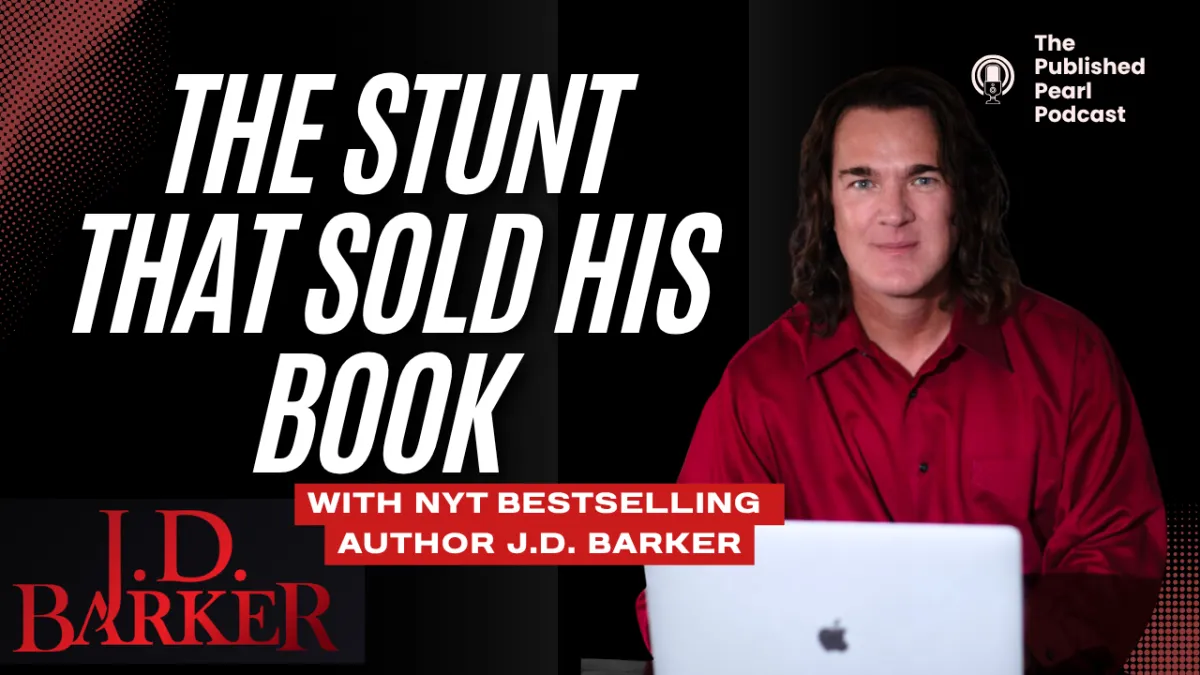
If you’re a coach or consultant writing a book to build your authority, you don’t have the luxury of blending in. Your book is not a cute side project; it’s a strategic asset meant to open doors, attract aligned clients, and amplify the message God trusted you to carry. In a noisy, crowded publishing world, you need a sharper strategy than “write it, launch it, and hope.” You need a plan as intentional as your calling. On The Published Pearl episode with JD Barker, we discussed how he is thinking strategically about distribution, and how you can as well. Watch the full episode here, and then come back for a deeper dive into the strategy.
Your Book Is Not a Hobby. It’s a Strategic Weapon.
At Rose and Pearl Publishing, we treat your book the way you treat your clients’ transformation: with stewardship, precision, and holy confidence. The goal isn’t just to “get published.” The goal is to architect a book that earns attention, builds demand, and multiplies your influence without compromising your faith or your voice.
To do that, we’re going to borrow from a thriller mastermind: JD Barker. No, you’re probably not writing serial-killer fiction. But the way Barker approaches Book Marketing, visibility, and the publishing ecosystem holds sharp lessons for any coach or consultant who wants their message to actually move in the world. We’ll weave his playbook with Kingdom-aligned discernment so you can stand out without selling out.
First: What Does It Really Mean for a Book to “Stand Out”?
Standing out is not about screaming the loudest or manufacturing controversy. It’s about strategic clarity: who this book is for, what problem it solves, and why it carries a voice they can’t find anywhere else. If you can’t say that in one tight, unflinching sentence, your book is not ready for the world yet—it’s still a draft in disguise.
💡 Prophetic Pro Tip: Ask yourself, “If my ideal client only read chapter one, would they feel seen, convicted, and compelled to keep going?” If not, you don’t have a standout book yet—you have a polite one.
Lesson from JD Barker: Think Global, Not Local, from Day One
When JD Barker announced The First Scarlet Door, a prequel to his 4MK series, he didn’t tiptoe into the market. He orchestrated a global release across roughly 150 countries and around two dozen languages, partnering with Hampton Creek Press and Simon & Schuster for a synchronized launch. That’s not overkill; it’s a publishing strategy built on visibility, momentum, and scale (GlobeNewswire, 2026).
You may not be ready for 150 countries on day one—but you are ready to stop thinking like a local secret. You’re building a book that can travel: across cities, industries, denominations, and time zones. That means your concept, your title, your subtitle, and your structure must be exportable. Clear. Punchy. Not dependent on insider jargon that only your current circle understands.
📌 Key Takeaway: If your book only makes sense to people already in your world, it will never grow your world. Write for the people who don’t know you yet—but desperately need what you carry.
How to Make Your Book Stand Out Before a Single Copy Is Printed
1. Ruthless Concept Clarity
Coaches and consultants often try to cram their entire life’s work into one book. The result? A bloated, blurry message that feels like a course catalog instead of a clear, compelling promise. A standout book is narrower than your expertise but deeper than your free content. It owns one problem and solves it thoroughly, with your unique methodology and your spiritual lens fully present.
Name the one core transformation your reader walks away with.
Strip out every chapter that doesn’t directly serve that transformation—even if you love it.
Align your stories, frameworks, and scripture references around that single throughline.
2. A Cover That Signals “This Is Not Another Generic Business Book”
Your cover is not decoration; it is a positioning device. JD Barker’s thrillers don’t whisper “maybe suspense”; they visually shout “high-stakes psychological ride.” Your book needs the same unapologetic clarity. For a faith-aligned authority book, that might mean:
Bold typography that feels modern, clean, and confident—no flimsy fonts that look like clip art devotionals from 1998.
A restrained, neutral color palette that plays well with your brand colors.
Imagery that speaks to your reader’s identity and future, not just your topic—less “stack of books,” more “threshold moment.”
3. A Spine and Title Built for the Shelf Scroll
In a bookstore or on a virtual “shelf,” your book gets a split second. JD Barker’s titles—The Fourth Monkey, The First Scarlet Door—are short, intriguing, and sticky. Your nonfiction title should be:
Memorable: easy to say, easy to repeat, easy to share in a podcast intro.
Promise-driven: your subtitle carries the transformation and keywords (lead generation, high-ticket clients, Kingdom leadership, etc.).
Aligned: it should sit comfortably beside other authority books in your niche—and still feel distinct.
Bold Strategies for Book Marketing: Beyond “Post and Pray”
Let’s be blunt: most coaches’ book launches are glorified birthday parties—balloons, confetti, one big day, and then silence. That’s not Book Marketing. That’s a moment. You need a campaign that builds before launch, peaks strategically, and sustains long after the confetti settles. JD Barker’s approach gives us a few sharp cues.
1. Coordinated, Not Casual, Launches
Barker’s global 4MK prequel release is a masterclass in synchronization. For you, that might look like:
Pre-booking podcast interviews, summit appearances, and guest trainings to stack around your launch window.
Aligning your email list, social channels, and partner audiences around one clear call to action for at least 4–6 weeks.
Planning tiered offers that connect your book to your deeper work—VIP intensives, group programs, consulting retainers—so your launch drives revenue, not just rankings.
2. Influencer and Reader-Driven Visibility—Without Compromising Integrity
JD Barker leans into TikTok through his #AmReadingJDBarker initiative, inviting creators to share videos of his books for compensation and promotion. It’s smart: it harnesses organic enthusiasm and the power of BookTok’s algorithm (jdbarker.com). But he’s also had to navigate controversy when a 2024 campaign crossed lines with risqué prompts, prompting public backlash and a course correction (Washington Post, 2024).
As a faith-driven leader, your influencer strategy must be ethically clean and spiritually aligned. You can absolutely:
Invite aligned creators to share honest reviews and key takeaways from your book in short-form video.
Offer bonuses, affiliate commissions, or early access for partners who champion your launch.
Provide clear, values-aligned guidelines that protect both your brand and theirs.
⚠️ Warning: Visibility built on shock fades fast and fractures trust. Visibility built on integrity and real transformation compounds quietly and powerfully. Choose the long game.
3. Experiential, Story-Rooted Campaigns
Barker’s haunted-house sleepover giveaway for Something I Keep Upstairs is an extreme example of experiential marketing—tying the story world to a real-world experience that media and readers can’t resist. You don’t need a haunted mansion, but you do need experiences that embody your book’s promise.
Host a live “implementation retreat” where readers apply your frameworks to their business in real time.
Offer a prophetic strategy session giveaway for readers who share their biggest breakthrough from the book.
Create a 5-day challenge that walks them through a core chapter, turning passive reading into active transformation.
Understanding the Publishing Landscape: Choose Your Path with Eyes Wide Open
The publishing world in 2026 is not a simple fork in the road between “traditional” and “self.” It’s a spectrum. Hybrid Publishing has matured into a legitimate third path—one that can be powerful for coaches and consultants, if you approach it with discernment instead of desperation.
Traditional, Self, and Hybrid: The Real Trade-Offs
Traditional Publishing: Slower timelines (often 12–18+ months), lower royalties, more gatekeepers, but potential prestige and broader distribution if you land the right house. You trade control for infrastructure and brand halo.
Self-Publishing: Maximum control, fastest speed, highest potential royalties—but you own every decision, from editing to cover to distribution. Done sloppily, it screams “DIY.” Done well, it can rival traditional quality but demands serious strategy and investment.
Hybrid Publishing: A curated middle path. You invest upfront (commonly $10,000–$25,000+), receive professional editorial, design, and distribution, and often earn 50%+ of net revenue (LegalClarity, 2026). Timelines are faster (6–12 months), but outcomes vary widely, and not all hybrids are honorable or effective.
The Independent Book Publishers Association now defines clear criteria for legitimate hybrid publishers—emphasizing editorial selectivity, transparent contracts, and professional standards (IBPA, 2022). If a “hybrid” doesn’t meet those, it’s likely a vanity press in a new outfit. You’re too wise to fall for that.
The Hybrid Publishing Model: When It Serves Coaches and Consultants Well
For a high-level coach or consultant, time is often your most expensive resource. You’re not chasing an advance; you’re building a client acquisition and authority engine. In that context, a strong hybrid partner—or a strategic consultancy like Rose and Pearl Publishing—can be a wise investment if:
You value professional-level editing, design, and production but don’t want to manage a dozen freelancers yourself.
You need your book in-market within 6–12 months to align with launches, events, or a shifting niche.
You understand that the book’s primary ROI is not royalties but clients, speaking invitations, partnerships, and legacy.
💡 Pro Tip: When evaluating a hybrid publisher, ask, “What can you provide that I cannot assemble myself with a trusted strategist?” If they can’t answer clearly, keep walking.
Tech and Trends You Can Leverage Boldly (Without Losing Your Soul)
The 2026 publishing landscape is increasingly digital-first. Hybrid and indie authors are leaning into:
AI narration for audiobooks—now roughly 15% of new productions and up to 90% cheaper than human narration (Impressive Magazine, 2026). For some niches, this is a smart way to test audio before investing in a studio narrator.
AI-powered book trailers using tools like Sora 2 and Veo 3—giving you cinematic assets without Hollywood budgets.
Direct-to-reader sales, with about 30% of indie authors selling books from their own sites to keep more revenue and deepen relationships (Impressive Magazine, 2026).
None of these tools replace your anointing, your message, or your craft. They simply multiply your reach when stewarded well. Use them as servants, not as masters.
Word of Mouth and the Long Game of Influence
Algorithms spike. Ads fatigue. But word of mouth is stubbornly timeless. JD Barker’s coordinated launches and TikTok strategies are powerful, but what keeps his books moving is readers telling other readers, “You have to read this.” That’s the same energy you want in your niche: clients telling their mastermind, their pastor, their team, “You need this book if you’re serious.”
How to Design for Word of Mouth on Purpose
Create quotable moments. Short, sharp lines that beg to be highlighted, shared, and preached back. Think scripture-infused soundbites that carry actual weight, not fluff.
Build in discussion. Reflection questions, activation prompts, or “Boardroom Conversations with God” at the end of each chapter invite readers to process—and to process with others.
Make sharing easy. Offer a free discussion guide, slide deck, or workshop outline on your site for leaders who want to use your book with their teams or communities.
📌 Key Takeaway: Word of mouth is not random favor; it’s often the fruit of intentional design. Build a book that’s easy to talk about, easy to quote, and easy to implement.
Building Author Visibility: You’re Not Just Selling a Book, You’re Establishing a Voice
Author Visibility is not vanity; it’s stewardship. If God entrusted you with a message for the marketplace or the Church, hiding is not humility—it’s disobedience. JD Barker doesn’t just release novels; he writes essays for outlets like Forbes and Rolling Stone on writing, disruption, and author brands. That’s strategic visibility: he’s not only telling stories, he’s shaping conversations (jdbarker.com, 2026).
10 Bold Ways to Increase Your Author Visibility in 2026
Own your platform. Build a clean, authoritative website that centers your book and your core offers, optimized with the keywords your clients actually use (not just what sounds spiritual).
Show up where your clients are already scrolling. LinkedIn, Instagram, YouTube, or podcasts—pick one or two and go deep instead of scattering yourself thin (Writer’s Digest; The Creative Penn).
Create content that extends the book. Articles, Substack essays, or short videos that expand key chapters and point back to the book as the core framework.
Guest where your readers gather. Pitch podcasts, summits, conferences, and church leadership events that serve your exact reader profile—not just any stage that says yes.
Leverage email as your inner circle. Build a list, nurture it, and invite readers behind the scenes of your message, your process, and your obedience journey (The Creative Penn, 2023).
Host virtual rooms. Webinars, live Q&As, or intimate Zoom salons where you teach from the book and coach live—turning readers into clients and champions.
Collaborate with other authors and leaders. Co-host events, bundle offers, or do “book swaps” where you each introduce the other’s work to your audience (BookBub, 2024).
Ask for reviews boldly. From clients, peers, and early readers. Make it simple: provide links, prompts, and gratitude. Reviews are credibility, not ego.
Repurpose ruthlessly. One chapter can become multiple posts, reels, podcasts, and talks. Your book is a content goldmine—stop treating it like a one-time event.
Stand for something. Visibility grows when your voice is clear. Don’t dilute your convictions to be more “marketable.” Your clarity is your magnet.
Bringing It All Together: A Strategic, Spirit-Led Plan for Your Book
Let’s stitch this together. To make your book stand out as a coach or consultant, you need more than inspiration. You need a publishing strategy that honors your calling and respects the realities of the market. JD Barker’s bold moves—global launches, TikTok engagement, experiential campaigns, and thought leadership—show what’s possible when you treat your books like serious assets, not side hustles. The 2026 landscape of Hybrid Publishing, AI tools, and direct-to-reader models expands your options—but also raises the stakes for discernment.
Your assignment is clear:
Craft a concept that is narrow, deep, and unapologetically you—anchored in Kingdom values and real-world results.
Design a book—inside and out—that visually and structurally signals authority, clarity, and transformation.
Choose a publishing path (traditional, self, or hybrid) that aligns with your timeline, your goals, and your capacity, not your fears.
Build a bold, integrity-filled Book Marketing plan that leverages influencers, experiences, and content without compromising your message.
Engineer for word of mouth and Author Visibility from the beginning—so your book keeps working long after launch week.
Ready to Stop Playing Small with Your Message?
If your spirit is nudging you—if you know your next level of impact is locked inside a book that actually stands out—it’s time to stop guessing and start strategizing. This is where Rose and Pearl Publishing comes in. We don’t just “help you publish.” We partner with you to architect a signature, authority-building book that:
Honors your faith and your voice.
Attracts aligned, ready-to-invest clients into your ecosystem.
Positions you as the go-to authority in your space—not just another coach with a book.
You’re not called to whisper. You’re called to steward a message that shifts rooms, industries, and generations. Let’s build the book that carries that weight—strategically, excellently, and in step with the Spirit.
✨ Next Step: Book a Strategy Session with Rose and Pearl Publishing to map out your hybrid-friendly, authority-building publishing plan—so your book doesn’t just exist, it stands out and multiplies your influence.
If You’re Ready to Write Your Own Book
If you’re reading this and realizing your book has been sitting in the background longer than it should, there are a few ways to move forward depending on where you are in the process.
At the beginning?
The Write Start will help you get clear on your message, your audience, and the structure of your book so you’re not guessing your way through the first draft.
Already writing, but stuck or inconsistent?
Write It Anyway helps you build momentum, move past resistance, and actually finish your manuscript.
Looking for ongoing guidance as you write and publish?
The Published Pearl Newsletter is where I share weekly insight on writing, publishing, and stewarding the message God has entrusted to you.
If this post helped you think differently about your book, consider sharing it with someone else who’s been carrying a message they haven’t written yet.
The Published Pearl exists to serve authors who believe their book is more than content—it’s calling, stewardship, and obedience. This post may contain affiliate links, which means we may earn a small commission at no additional cost to you.