
Read These 10 Books And You'll Think Like A CEO
Read These 10 Books And You'll Think Like A CEO
Most people read for fun. CEOs read for a competitive advantage worth billions. They aren't just flipping pages; they're hunting for strategies, frameworks, and ways of thinking that can transform an entire company.
I’ve spent the last decade devouring hundreds of books on business and leadership, and I realized the world’s top executives don’t just read more—they read differently. They read with purpose. They read for an edge.
In this video, I'm pulling back the curtain on the 10 books that will install a CEO's mindset right into your brain. This isn't just another reading list; it’s a blueprint for the kind of strategic thinking that builds empires. Forget everything you think you know about business books. These are the ones that actually matter. Let’s get into it.
If you’d rather walk through this list with me and hear how these ideas connect in real time, you can watch the full episode of The Published Pearl Podcast below. Sometimes hearing the nuance behind each book—and how these frameworks actually play out in leadership—makes it click in a completely different way.
Book 1: Atomic Habits by James Clear
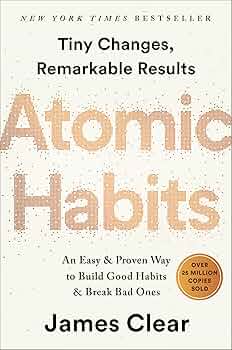
While most of these books are about leading a company, the most important system any CEO has to manage is their own. Atomic Habits is the ultimate guide to personal change, and its principles are used by top executives to optimize their own performance. Author James Clear argues that goals aren't the key to success—your systems are.
His framework is built on a simple but game-changing idea: you do not rise to the level of your goals; you fall to the level of your systems. The secret to getting massive results is to make tiny, 1% improvements every single day. These small habits compound over time into unbelievable transformation. For a CEO, this is the model for all improvement, both personal and organizational. Instead of chasing outcomes, you focus on building the right routines, because habits make success the inevitable result.
Book 2: CEO Excellence by Scott Keller, Vik Malhotra, & Carolyn Dewar
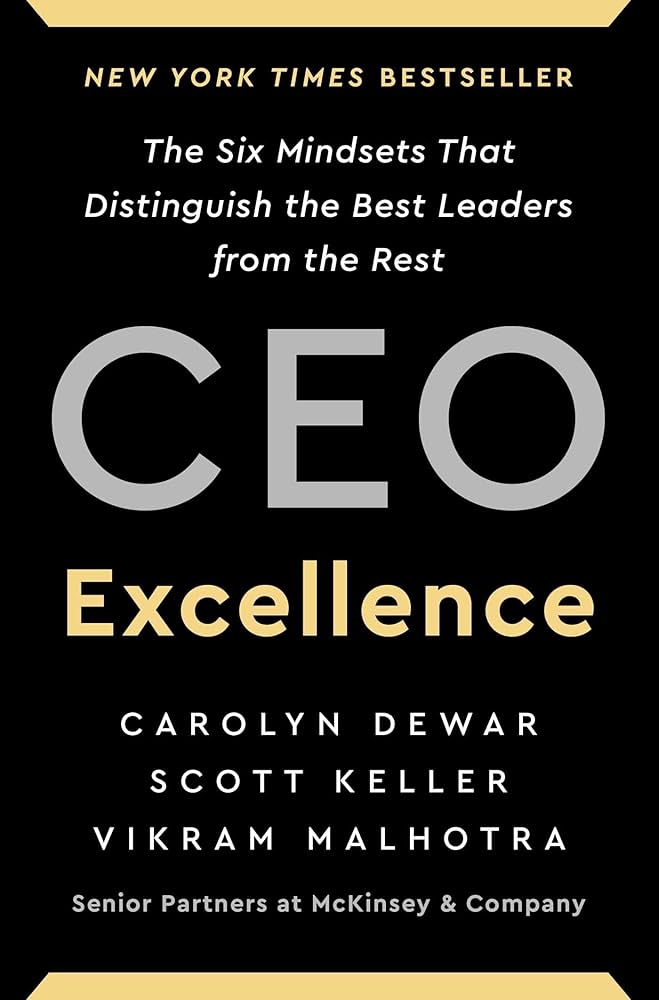
Next is the modern playbook for any 21st-century leader, CEO Excellence. While other books look at companies, this one looks at the CEOs themselves. The authors, all senior partners at McKinsey, distilled what they learned from interviews with 67 of the world's best-performing CEOs, from Netflix to JPMorgan Chase.
They found that the top job isn't some unexplainable mystery. It really boils down to six core responsibilities and a specific set of mindsets that separate the truly great from the merely good. This book isn't about vague theories; it gives you the exact practices for setting a direction, getting your organization on the same page, and managing yourself under crushing pressure. It teaches you that being a great CEO isn't about having all the answers—it's about adopting the right mindset to find them.
Book 3: Good to Great by Jim Collins
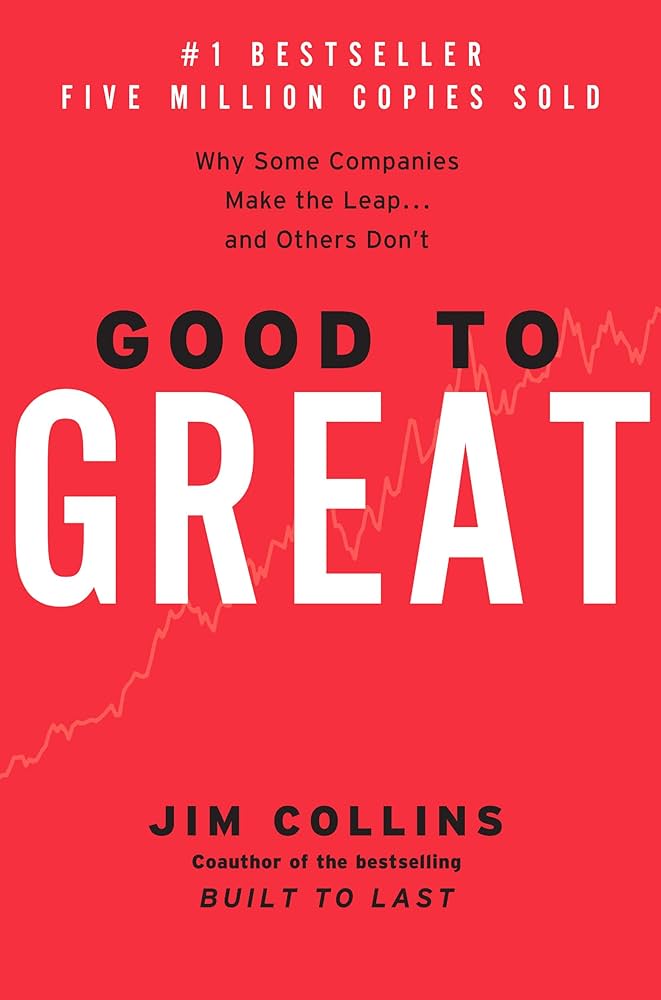
You can't have a list like this and not include this timeless classic. For over two decades, Good to Great has been a boardroom staple for one simple reason: the principles just work. While some of the companies in the book have changed, the core ideas are as powerful as ever. Collins and his team spent years figuring out what made good companies become truly exceptional ones.
It wasn't a single moment of genius. It was built on three core ideas. First, Level 5 Leadership: a weird combination of deep personal humility and intense professional will. Second, the Hedgehog Concept: figuring out the one thing you can be the best in the world at and pointing all your energy in that direction. And third, maybe the most important rule of all: First Who, Then What. You have to get the right people on the bus before you even decide where you’re going to drive it. This book proves that disciplined people, disciplined thought, and disciplined action are how you build something that lasts.
Book 4: Traction: Get a Grip on Your Business by Gino Wickman
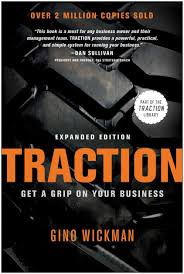
If Good to Great is the philosophy, Traction is the nuts-and-bolts operating manual. This book is for any leader who is sick of spinning their wheels and wants to see real, measurable progress. Author Gino Wickman gives you a powerful framework called the Entrepreneurial Operating System, or EOS. It's a proven set of tools that helps leaders get a grip on their business across six key areas: Vision, People, Data, Issues, Process, and finally, Traction.
The whole point is to finally shift from working "in" your business to working "on" your business. You do this by creating crystal-clear accountability, running brutally effective weekly meetings, and setting quarterly priorities—called "Rocks"—that keep the entire company laser-focused. Traction isn't a silver bullet. It's about installing a system of discipline and accountability that makes your business clear, focused, and ready to scale.
Book 5: The Lean Startup by Eric Ries
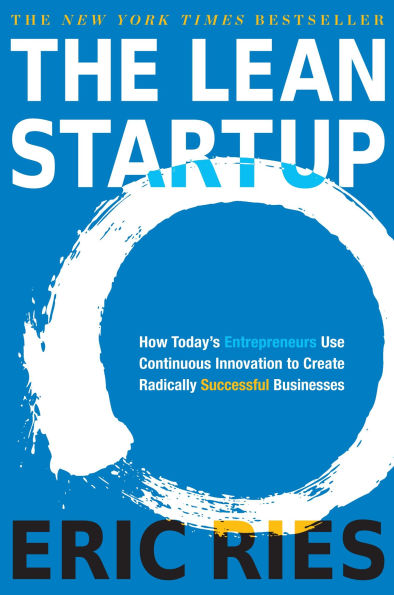
In the world we live in today, the biggest risk isn't building the wrong thing—it's building something that absolutely nobody wants. The Lean Startup totally flipped the script on how modern companies approach innovation. Eric Ries introduced a radical idea: start small, test everything, and adapt on the fly. At the heart of it all is the Build-Measure-Learn feedback loop.
Instead of hiding for a year to perfect a product, you build a Minimum Viable Product (an MVP) and get it in front of real customers as fast as humanly possible. Then, you measure how they react and learn from that data—a process Ries calls "validated learning." This framework gives you the power to either pivot your strategy or double down, based on real evidence, not just your assumptions. For a CEO, this mindset is crucial. It replaces guesswork with a scientific method for building a business and makes sure you never waste your most precious resource—time.
Book 6: The 5 Levels of Leadership by John C. Maxwell
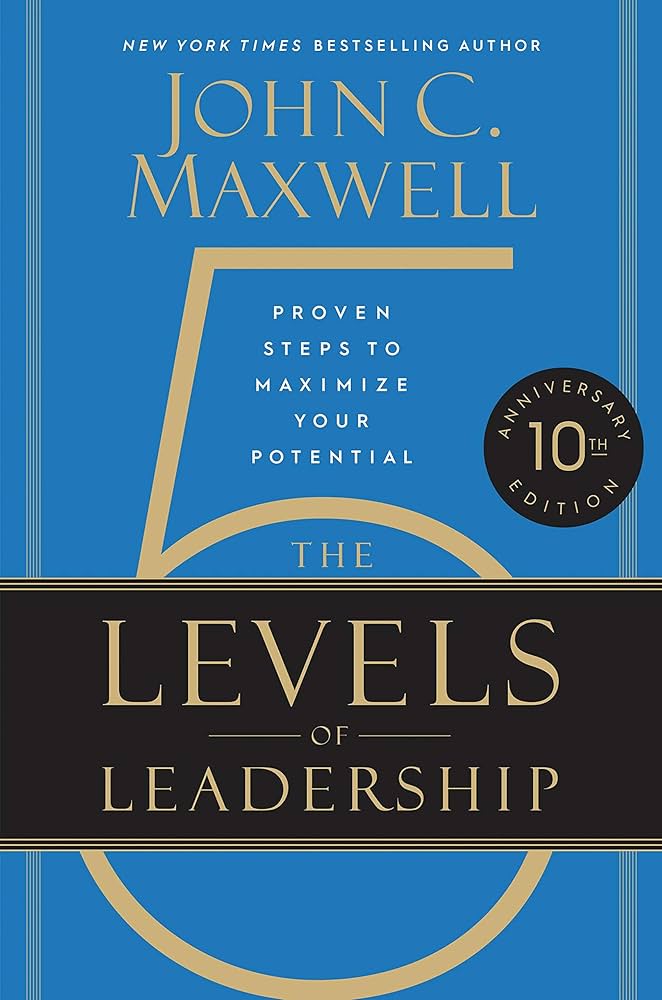
No leader, especially a Christian CEO, can have a complete toolkit without the wisdom of John C. Maxwell. His masterwork, The 5 Levels of Leadership, provides the roadmap for growing your influence. Maxwell argues that true leadership isn't a title; it's a journey of earning trust and adding value.
He breaks it down into five clear stages. You start at Level 1, Position, where people follow you because they have to. The goal is to move to Level 2, Permission, where people follow because they want to, based on relationship. Then comes Level 3, Production, where people follow because of the results you bring to the organization. Great leaders push to Level 4, People Development, where your focus shifts to raising up other leaders. Finally, you reach Level 5, the Pinnacle, where people follow you for who you are and what you represent—your legacy. This book challenges you to see leadership not as a destination, but as a daily calling to develop yourself and those you lead.
Book 7: The Hard Thing About Hard Things by Ben Horowitz
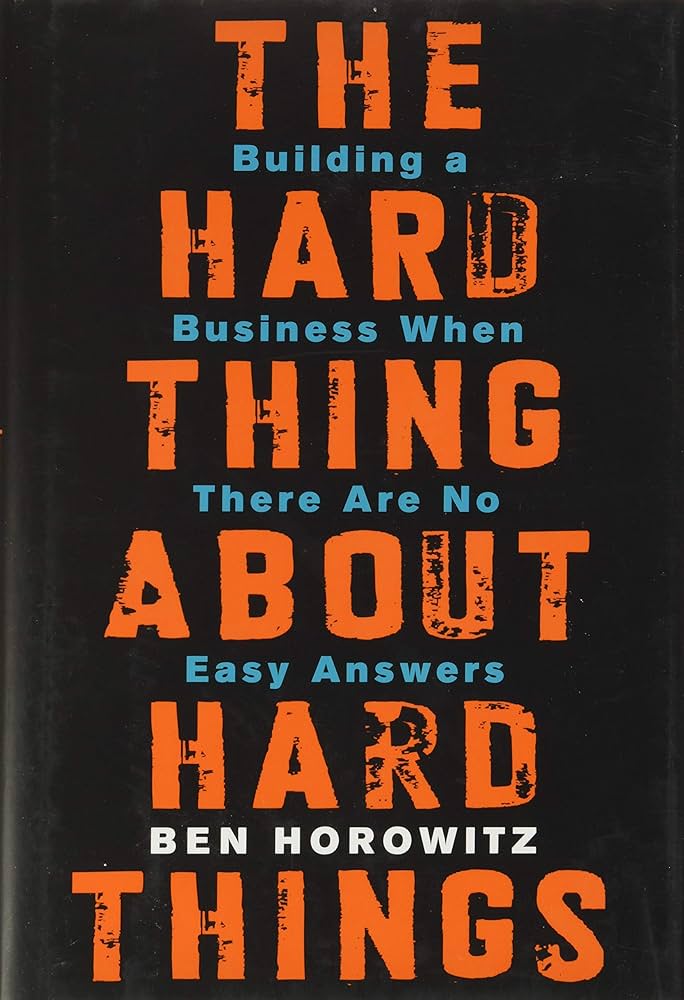
Most business books are about how to get things right. This one is about what to do when everything goes horribly wrong. Written by Ben Horowitz, co-founder of the legendary venture capital firm Andreessen Horowitz, this is the unvarnished truth about just how brutal it is to run a business. You won't find any easy answers here—just raw, honest lessons from crises, layoffs, and near-death experiences.
Horowitz makes a critical distinction between a "Peacetime CEO" and a "Wartime CEO." A Peacetime CEO focuses on expanding the company and strengthening the culture. But a Wartime CEO is fighting for survival against a threat that could kill the entire company. They have to make brutal, high-stakes decisions with zero room for error. This book prepares you for the psychological beatdown of leadership and gives you real advice for the lonely, impossible challenges every CEO will face.
Book 8: Measure What Matters by John Doerr
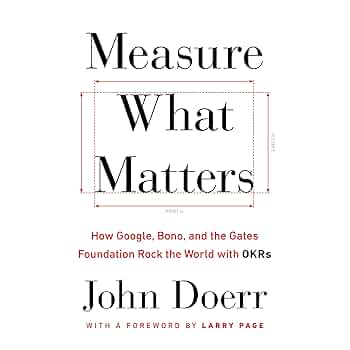
An idea, no matter how brilliant, is totally useless if you can't execute on it. Measure What Matters is the definitive guide to the world's most effective goal-setting system: Objectives and Key Results (OKRs). Legendary venture capitalist John Doerr introduced this framework to a small startup called Google back in 1999, and it was a key ingredient in their insane growth.
The system is beautiful in its simplicity. An Objective is what you want to achieve—something significant and inspiring. Key Results are how you're going to get there—they have to be specific and measurable. If you hit your Key Results, you achieve your Objective. What makes OKRs so powerful is how they create focus and alignment from the CEO all the way to the front lines. Everyone knows what matters most, and every single person can see how their daily work connects to the company's biggest priorities.
Book 9: The Five Dysfunctions of a Team by Patrick Lencioni
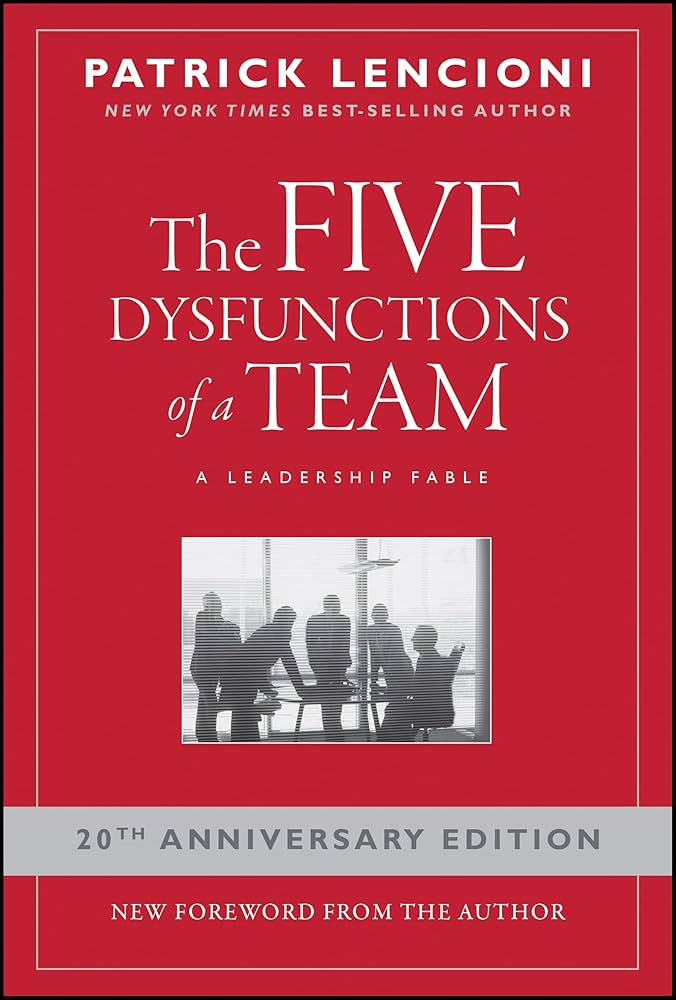
A CEO is only as good as their leadership team. Period. This book is the essential text for building a team that is cohesive and actually performs at a high level. Patrick Lencioni tells his model as a story, which makes it incredibly easy to read, but the lessons are dead serious. He lays out a pyramid of five dysfunctions that are connected and will cripple even the most talented groups.
It all starts with an absence of trust. Without trust, you get a fear of conflict, which leads to a lack of commitment. That creates an avoidance of accountability, and ultimately, a total inattention to results. By learning to spot and overcome these five dysfunctions, a CEO can turn a group of smart individuals into a true team that is aligned, accountable, and obsessed with winning together.
Book 10: The Bible

You can’t build a list for a Christian CEO and not include the ultimate leadership manual. The Bible isn’t just a spiritual guide—it’s the original blueprint for leadership, stewardship, decision-making, and legacy. Every principle modern business books are built on—vision, discipline, wisdom, humility, stewardship—you’ll find them here first.
This is where you learn what it actually means to lead. Not from a place of ego, but from a place of calling. Proverbs lays out practical wisdom for decision-making, integrity, and handling wealth. Nehemiah shows you how to rebuild something broken while leading people through opposition. Joseph models long-term vision and stewardship under pressure. And Jesus Himself redefines leadership entirely—not as power over people, but responsibility for them.
The Bible teaches you that leadership is stewardship. That success without character is failure. That wisdom matters more than speed. And that the decisions you make today echo into generations you may never meet.
Every other book on this list will sharpen your strategy. This one anchors your leadership. It aligns your ambition with your assignment and reminds you that you’re not just building a business—you’re building something that answers to God.
If you want to lead with clarity, conviction, and authority that actually lasts, this isn’t optional. It’s fundamental.
If you’re feeling stuck on which Bible to choose, don’t overcomplicate it—the best translation is the one you will actually read consistently. Some people love the word-for-word precision of the English Standard Version Bible, while others prefer a more conversational flow like the New Living Translation Bible. What matters most is clarity and consistency, not perfection. If you want something that helps you go deeper and actually apply what you’re reading, a study Bible is a powerful place to start. I personally recommend the ESV Women’s Study Bible because it doesn’t just give you Scripture—it helps you understand it, connect it to your life, and grow in wisdom as you lead. Choose one, open it daily, and let it shape how you think, decide, and lead.
Conclusion
These ten books offer more than insight—they shape how you think, how you lead, and how you build. From the strategic clarity of Good to Great to the execution frameworks in Traction and Measure What Matters, each one sharpens a different part of your leadership. But strategy alone isn’t what sustains something over time.
You can have the right systems, clear goals, and a strong team—and still build something that doesn’t last. That’s why the Bible stands apart from every other book on this list. It doesn’t just inform your leadership; it anchors it. It aligns your decisions with wisdom, your ambition with purpose, and your work with something that extends far beyond the business itself.
This kind of reading isn’t about collecting ideas. It’s about forming the mindset and convictions that shape how you lead over time. The real advantage isn’t hidden. It’s built—one page, one principle, one decision at a time. The only question is where you begin.
If You’re Ready to Write Your Own Book
If you’re reading this and realizing your book has been sitting in the background longer than it should, there are a few ways to move forward depending on where you are in the process.
At the beginning?
The Write Start will help you get clear on your message, your audience, and the structure of your book so you’re not guessing your way through the first draft.
Already writing, but stuck or inconsistent?
Write It Anyway helps you build momentum, move past resistance, and actually finish your manuscript.
Looking for ongoing guidance as you write and publish?
The Published Pearl Newsletter is where I share weekly insight on writing, publishing, and stewarding the message God has entrusted to you.
If this post helped you think differently about your book, consider sharing it with someone else who’s been carrying a message they haven’t written yet.
The Published Pearl exists to serve authors who believe their book is more than content—it’s calling, stewardship, and obedience. This post may contain affiliate links, which means we may earn a small commission at no additional cost to you.